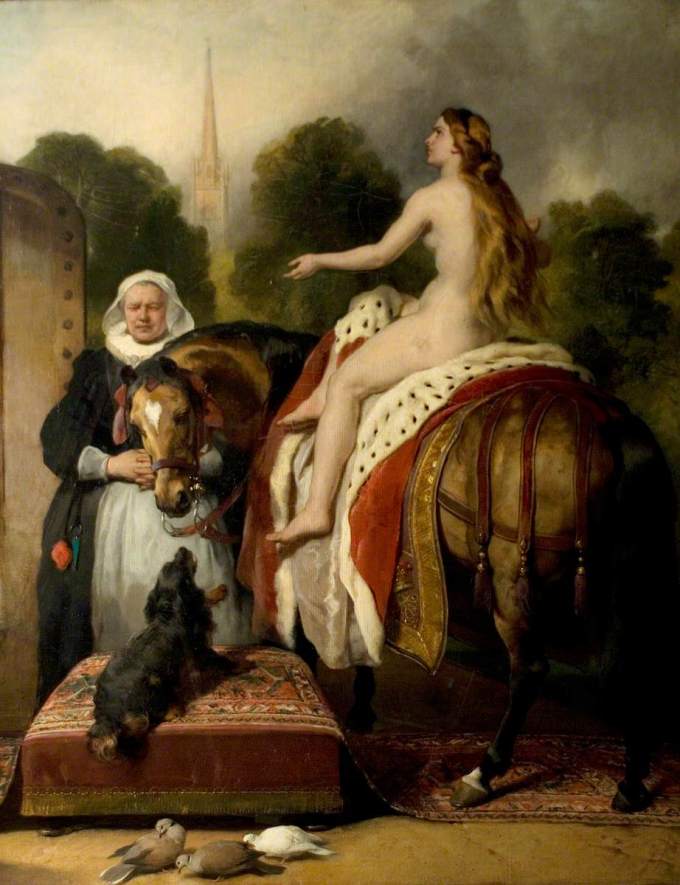
Dream : I was somewhere with a male friend in a car, when he parked the car, he went in a store me waiting in the car when it rolled backwards and drove by itself through a city with a castle making a sharp left turn, the traveling ending up in a garage with blankets, a man approached the garage, then I woke up within the dream being in a modern phychiatic clinic, the nurse said that I resisted arrest and gave me medication that I could not afford in sliced breakfast sausages. So far the dream.
Inception, 2010.
Margrethe II.
Margrethe Alexandrine Þórhildur Ingrid Glücksburg: “also a little proud that they have chosen our little paradise”.
Þórhildur, “Thor’s battle”, “Thunder battle”.
Why are the letters of Þórhildur not part of the official danish alphabet?
Þ (Thorn): Old Danish and Old Norse once used this runic-derived letter to make the “th” sound. Over time, scribes and the printing press replaced it with the digraph “th,” leaving it to survive only in modern Icelandic. ó (Accent): The Danish alphabet consists of the standard 26 Latin letters plus three distinct vowels at the end: Æ, Ø, and Å. Modern Danish orthography does not use accented vowels (like ó) to alter letter pronunciation as Icelandic does.
Danish alphabet: A, B, C, D, E, F, G, H, I, J, K, L, M, N, O, P, Q, R, S, T, U, V, W, X, Y, Z, Æ, Ø, Å, 29 letters.
Icelandic alphabet: A, Á, B, D, Ð, E, É, F, G, H, I, Í, J, K, L, M, N, O, Ó, P, R, S, T, U, Ú, V, X, Y, Ý, Þ, Æ, Ö, 32 Latin-script letters.
IX II X. 9 2 10. Frederik XIX. backwards.
Bonn-Copenhagen declarations.
The declarations establish that minorities have same civil rights as other citizens of the country of residence and that issues relating to the minorities are internal matters of each of the two countries.
Germany has an official political party representing the Danish minority called the SSW (Südschleswigscher Wählerverband or South Schleswig Voters’ Association). As a recognized national minority party, the SSW is exempt from the standard 5% vote threshold required by other German parties to win seats. The SSW holds four seats in the Schleswig-Holstein state parliament (Landtag) and also holds a seat in the federal parliament (Bundestag) in Berlin. five percent hurdle.
No, you do not need to be a German citizen to be a member of the SSW (South Schleswig Voters’ Association). This true but obviously unconstitutional exemption indicates the precence of mind-control technologies. The term minority can be associated with dish brains or cryonics.
No, you cannot be elected as a member of parliament in Germany as a member of the SSW (South Schleswig Voters’ Association) without German citizenship. According to German electoral law and the Basic Law, the right to stand for election (passive suffrage) in both the federal parliament (Bundestag) and state parliaments (Landtag) is strictly restricted to German citizens.
Donald John Trump Jr., Bettina Anderson, Harry Loy Anderson, Jeffrey Epstein.
Christina Block, how are you?
Joachim-Friedrich Martin Josef Merz, how are you?
James David Vance, how are you?
James Donald Bowman.
Fitzcarraldo, 1982, Brian Sweeney Fitzgerald.
Blank, Les (1982). “English captions of documentary Burden of Dreams from 1:11:25 to 1:12:40″. Burden of Dreams. Archived from the original on 1 November 2006. [Werner Herzog:] Well, the boat that [Carlos Fermín Fitzcarrald] actually pulled across was only 30 tons. … Besides, they, uh, disassembled it in about 14 or 15 parts … The central metaphor of my film is that they haul a ship over what’s essentially an impossibly steep hill. … [Les Blank:] a complicated system to pull Herzog’s ship over the hill … But the system is designed for a 20-degree slope. Herzog insists on 40 degrees.”
This Side of Paradise, F. Scott Fitzgerald.
The Star Trek episode with the same name is also significant, because it puts logic aside, one of the skills that Spock is famous for, and only maneuvers between love and agression. My father used to say “Das ist doch keine Logik”. He must have noticed false manipulation.
AKA of Star Trek is “Raumschiff Enterprise”. ENTERPRISE is also a term in the context of MKULTRA.
Also besides the category “lost in translation”, we need a category “lost in literature”, which reminds me of the TV series Lost 2004-2010. Lost on the way to a goal, definition of goals.
globally the goal is to maintain the values of a constitution, that leads to documentation and definition of those values in a codified constitution, creating a codified constitution as a consistent framework for these values.
page 201:
Benvenuto Cellini, (1500–1571):… an act of blood revenge but not justice as Cellini admits that his brother’s killer had acted in self-defense…. however, not to kill him, that I deprived him of the use of both his legs.
self defense triggers blood revenge.
Sack of Rome, Plünderung von Rom.
Benvenuto Cellini, the race horse.
Dutch, Niederländisch, (1).
Duchesse, Herzogin, (2).
Duch, Herzog, (3).
Duch, Dusche. (4).
page 204:
Atlanta, (5).
Atalanta, (6).
Algernon Charles Swinburne
(1837–1909)
ATALANTA IN CALYDON.
CHIEF HUNTSMAN.
Maiden, and mistress of the months and stars
Now folded in the flowerless fields of heaven,
Goddess whom all gods love with threefold heart,
Being treble in thy divided deity,
A light for dead men and dark hours, a foot
Swift on the hills as morning, and a hand
To all things fierce and fleet that roar and range
Mortal, with gentler shafts than snow or sleep;
Hear now and help and lift no violent hand,
But favourable and fair as thine eye’s beam
Hidden and shown in heaven; for I all night
Amid the king’s hounds and the hunting men
Have wrought and worshipped toward thee; nor shall man
See goodlier hounds or deadlier edge of spears;
But for the end, that lies unreached at yet
Between the hands and on the knees of gods.
O fair-faced sun, killing the stars and dews
And dreams and desolation of the night!
Rise up, shine, stretch thine hand out, with thy bow
Touch the most dimmest height of trembling heaven,
And burn and break the dark about thy ways,
Shot through and through with arrows; let thine hair
Lighten as flame above that flameless shell
Which was the moon, and thine eyes fill the world
And thy lips kindle with swift beams; let earth
Laugh, and the long sea fiery from thy feet
Through all the roar and ripple of streaming springs
And foam in reddening flakes and flying flowers
Shaken from hands and blown from lips of nymphs
Whose hair or breast divides the wandering wave
With salt close tresses cleaving lock to lock,
All gold, or shuddering and unfurrowed snow;
And all the winds about thee with their wings,
And fountain-heads of all the watered world;
Each horn of Acheloüs, and the green
Euenus, wedded with the straitening sea.
For in fair time thou comest; come also thou,
Twin-born with him, and virgin, Artemis,
And give our spears their spoil, the wild boar’s hide,
Sent in thine anger against us for sin done
And bloodless altars without wine or fire.
Him now consume thou; for thy sacrifice
With sanguine-shining steam divides the dawn,
And one, the maiden rose of all thy maids,
Arcadian Atalanta, snowy-souled,
Fair as the snow and footed as the wind,
From Ladon and well-wooded Mænalus
Over the firm hills and the fleeting sea
Hast thou drawn hither, and many an armed king,
Heroes, the crown of men, like gods in fight.
Moreover out of all the Ætolian land,
From the full-flowered Lelantian pasturage
To what of fruitful field the son of Zeus
Won from the roaring river and labouring sea
When the wild god shrank in his horn and fled
And foamed and lessened through his wrathful fords
Leaving clear lands that steamed with sudden sun,
These virgins with the lightening of the day
Bring thee fresh wreaths and their own sweeter hair,
Luxurious locks and flower-like mixed with flowers,
Clean offering, and chaste hymns; but me the time
Divides from these things; whom do thou not less
Help and give honour, and to mine hounds good speed,
And edge to spears, and luck to each man’s hand.
CHORUS.
When the hounds of spring are on winter’s traces,
The mother of months in meadow or plain
Fills the shadows and windy places
With lisp of leaves and ripple of rain;
And the brown bright nightingale amorous
Is half assuaged for Itylus,
For the Thracian ships and the foreign faces,
The tongueless vigil, and all the pain.
Come with bows bent and with emptying of quivers,
Maiden most perfect, lady of light,
With a noise of winds and many rivers,
With a clamour of waters, and with might;
Bind on thy sandals, O thou most fleet,
Over the splendour and speed of thy feet;
For the faint east quickens, the wan west shivers,
Round the feet of the day and the feet of the night.
Where shall we find her, how shall we sing to her,
Fold our hands round her knees, and cling?
O that man’s heart were as fire and could spring to her,
Fire, or the strength of the streams that spring!
For the stars and the winds are unto her
As raiment, as songs of the harp-player;
For the risen stars and the fallen cling to her,
And the southwest-wind and the west-wind sing.
For winter’s rains and ruins are over,
And all the season of snows and sins;
The days dividing lover and lover,
The light that loses, the night that wins;
And time remembered is grief forgotten,
And frosts are slain and flowers begotten,
And in green underwood and cover
Blossom by blossom the spring begins.
The full streams feed on flower of rushes,
Ripe grasses trammel a travelling foot,
The faint fresh flame of the young year flushes
From leaf to flower and flower to fruit;
And fruit and leaf are as gold and fire,
And the oat is heard above the lyre,
And the hoofèd heel of a satyr crushes
The chestnut-husk at the chestnut-root.
CHORUS.
When the hounds of spring are on winter’s traces,
The mother of months in meadow or plain
Fills the shadows and windy places
With lisp of leaves and ripple of rain;
And the brown bright nightingale amorous
Is half assuaged for Itylus,
For the Thracian ships and the foreign faces,
The tongueless vigil, and all the pain.
Come with bows bent and with emptying of quivers,
Maiden most perfect, lady of light,
With a noise of winds and many rivers,
With a clamour of waters, and with might;
Bind on thy sandals, O thou most fleet,
Over the splendour and speed of thy feet;
For the faint east quickens, the wan west shivers,
Round the feet of the day and the feet of the night.
Where shall we find her, how shall we sing to her,
Fold our hands round her knees, and cling?
O that man’s heart were as fire and could spring to her,
Fire, or the strength of the streams that spring!
For the stars and the winds are unto her
As raiment, as songs of the harp-player;
For the risen stars and the fallen cling to her,
And the southwest-wind and the west-wind sing.
… to be continued…
ŒNEUS.
Thou shouldst die as he dies
For whom none sheddeth tears;
Filling thine eyes
And fulfilling thine ears
With the brilliance of battle, the bloom and the beauty, the
splendour of spears.
CHORUS.
In the ears of the world
It is sung, it is told,
And the light thereof hurled
And the noise thereof rolled
From the Acroceraunian snow to the ford of the fleece
of gold.
MELEAGER.
Would God ye could carry me
Forth of all these;
Heap sand and bury me
By the Chersonese
Where the thundering Bosphorus answers the thunder of
Pontic seas.
ŒNEUS.
Dost thou mock at our praise
And the singing begun
And the men of strange days
Praising my son
In the folds of the hills of home, high places of Calydon?
MELEAGER.
For the dead man no home is;
Ah, better to be
What the flower of the foam is
In fields of the sea,
That the sea-waves might be as my raiment, the gulf-stream
a garment for me.
CHORUS.
Who shall seek thee and bring
And restore thee thy day,
When the dove dipt her wing
And the oars won their way
Where the narrowing Symplegades whitened the straits of
Propontis with spray?
MELEAGER.
Will ye crown me my tomb
Or exalt me my name,
Now my spirits consume,
Now my flesh is a flame?
Let the sea slake it once, and men speak of me sleeping to
praise me or shame.
CHORUS.
Turn back now, turn thee,
As who turns him to wake;
Though the life in thee burn thee,
Couldst thou bathe it and slake
Where the sea-ridge of Helle hangs heavier, and east upon
west waters break?
MELEAGER.
Would the winds blow me back
Or the waves hurl me home?
Ah, to touch in the track
Where the pine learnt to roam
Cold girdles and crowns of the sea-gods, cool blossoms of
water and foam!
CHORUS.
The gods may release
That they made fast;
Thy soul shall have ease
In thy limbs at the last;
But what shall they give thee for life, sweet life that is
overpast?
MELEAGER.
Not the life of men’s veins,
Not of flesh that conceives;
But the grace that remains,
The fair beauty that cleaves
To the life of the rains in the grasses, the life of the dews on
the leaves.
CHORUS.
Thou wert helmsman and chief;
Wilt thou turn in an hour,
Thy limbs to the leaf,
Thy face to the flower,
Thy blood to the water, thy soul to the gods who divide
and devour?
MELEAGER.
The years are hungry,
They wail all their days;
The gods wax angry
And weary of praise;
And who shall bridle their lips? and who shall straiten their
ways?
CHORUS.
The gods guard over us
With sword and with rod;
Weaving shadow to cover us,
Heaping the sod,
That law may fulfil herself wholly, to darken man’s face
before God
MELEAGER.
O holy head of Œneus, lo thy son
Guiltless, yet red from alien guilt, yet foul
With kinship of contaminated lives,
Lo, for their blood I die; and mine own blood
For bloodshedding of mine is mixed therewith,
That death may not discern me from my kin.
Yet with clean heart I die and faultless hand,
Not shamefully; thou therefore of thy love
Salute me, and bid fare among the dead
Well, as the dead fare; for the best man dead
Fares sadly; nathless I now faring well
Pass without fear where nothing is to fear
Having thy love about me and thy goodwill,
O father, among dark places and men dead.
ŒNEUS.
Child, I salute thee with sad heart and tears,
And bid thee comfort, being a perfect man
In fight, and honourable in the house of peace.
The gods give thee fair wage and dues of death,
And me brief days and ways to come at thee
MELEAGER.
Pray thou thy days be long before thy death,
And full of ease and kingdom; seeing in death
There is no comfort and none aftergrowth,
Nor shall one thence look up and see day’s dawn
Nor light upon the land whither I go.
Live thou and take thy fill of days and die
When thy day comes; and make not much of death
Lest ere thy day thou reap an evil thing.
Thou too, the bitter mother and mother-plague
Of this my weary body—thou too, queen,
The source and end, the sower and the scythe,
The rain that ripens and the drought that slays,
The sand that swallows and the spring that feeds,
To make me and unmake me—thou, I say,
Althæa, since my father’s ploughshare, drawn
Through fatal seedland of a female field,
Furrowed thy body, whence a wheaten ear
Strong from the sun and fragrant from the rains
I sprang and cleft the closure of thy womb,
Mother, I dying with unforgetful tongue
Hail thee as holy and worship thee as just
Who art unjust and unholy; and with my knees
Would worship, but thy fire and subtlety,
Dissundering them, devour me; for these limbs
Are as light dust and crumblings from mine urn
Before the fire has touched them; and my face
As a dead leaf or dead foot’s mark on snow,
And all this body a broken barren tree
That was so strong, and all this flower of life
Disbranched and desecrated miserably,
And minished all that god-like muscle and might
And lesser than a man’s: for all my veins
Fail me, and all mine ashen life burns down.
I would thou hadst let me live; but gods averse,
But fortune, and the fiery feet of change,
And time, these would not, these tread out my life,
These and not thou; me too thou hast loved, and I
Thee; but this death was mixed with all my life,
Mine end with my beginning: and this law,
This only, slays me, and not my mother at all.
And let no brother or sister grieve too sore,
Nor melt their hearts out on me with their tears,
Since extreme love and sorrowing overmuch
Vex the great gods, and overloving men
Slay and are slain for love’s sake; and this house
Shall bear much better children; why should these
Weep? but in patience let them live their lives
And mine pass by forgotten: thou alone,
Mother, thou sole and only, thou not these,
Keep me in mind a little when I die
Because I was thy first-born; let thy soul
Pity me, pity even me gone hence and dead,
Though thou wert wroth, and though thou bear again
Much happier sons, and all men later born
Exceedingly excel me; yet do thou
Forget not, nor think shame; I was thy son.
Time was I did not shame thee; and time was
I thought to live and make thee honourable
With deeds as great as these men’s; but they live,
These, and I die; and what thing should have been
Surely I know not; yet I charge thee, seeing
I am dead already, love me not the less,
Me, O my mother; I charge thee by these gods,
My father’s, and that holier breast of thine,
By these that see me dying, and that which nursed,
Love me not less, thy first-born: though grief come,
Grief only, of me, and of all these great joy,
And shall come always to thee; for thou knowest,
O mother, O breasts that bare me, for ye know,
O sweet head of my mother, sacred eyes,
Ye know my soul albeit I sinned, ye know
Albeit I kneel not neither touch thy knees,
But with my lips I kneel, and with my heart
I fall about thy feet and worship thee.
And ye farewell now, all my friends; and ye,
Kinsmen, much younger and glorious more than I,
Sons of my mother’s sister; and all farewell
That were in Colchis with me, and bare down
The waves and wars that met us: and though times
Change, and though now I be not anything,
Forget not me among you, what I did
In my good time; for even by all those days,
Those days and this, and your own living souls,
And by the light and luck of you that live,
And by this miserable spoil, and me
Dying, I beseech you, let my name not die.
But thou, dear, touch me with thy rose-like hands,
And fasten up mine eyelids with thy mouth,
A bitter kiss; and grasp me with thine arms,
Printing with heavy lips my light waste flesh,
Made light and thin by heavy-handed fate,
And with thine holy maiden eyes drop dew,
Drop tears for dew upon me who am dead,
Me who have loved thee; seeing without sin done
I am gone down to the empty weary house
Where no flesh is nor beauty nor swift eyes
Nor sound of mouth nor might of hands and feet.
But thou, dear, hide my body with thy veil,
And with thy raiment cover foot and head,
And stretch thyself upon me and touch hands
With hands and lips with lips: be pitiful
As thou art maiden perfect; let no man
Defile me to despise me, saying, This man
Died woman-wise, a woman’s offering, slain
Through female fingers in his woof of life,
Dishonourable; for thou hast honoured me.
And now for God’s sake kiss me once and twice
And let me go; for the night gathers me,
And in the night shall no man gather fruit.
ATALANTA.
Hail thou: but I with heavy face and feet
Turn homeward and am gone out of thine eyes.
CHORUS.
Who shall contend with his lords
Or cross them or do them wrong?
Who shall bind them as with cords?
Who shall tame them as with song?
Who shall smite them as with swords?
For the hands of their kingdom are strong.
page 209:
The “Dark Lady” is the mysterious, unnamed woman in Shakespeare’s sonnets (numbers 127–152).
Sonnet 127 – In the old age black was not counted fair
Sonnet 128 – How oft when thou, my music, music play’st
Sonnet 129 – The expense of spirit in a waste of shame
Sonnet 130 – My mistress’ eyes are nothing like the sun
Sonnet 131 – Thou art as tyrannous, so as thou art
Sonnet 132 – Thine eyes I love, and they, as pitying me
Sonnet 133 – Beshrew that heart that makes my heart to groan
Sonnet 134 – So, now I have confess’d that he is thine
Sonnet 135 – Whoever hath her wish, thou hast thy ‘Will’
Sonnet 136 – If thy soul check thee that I come so near
Sonnet 137 – Thou blind fool, Love, what dost thou to mine eyes
Sonnet 138 – When my love swears that she is made of truth
Sonnet 139 – O! call not me to justify the wrong
Sonnet 140 – Be wise as thou art cruel; do not press
Sonnet 141 – In faith I do not love thee with mine eyes
Sonnet 142 – Love is my sin, and thy dear virtue hate
Sonnet 143 – Lo, as a careful housewife runs to catch
Sonnet 144 – Two loves I have of comfort and despair
Sonnet 145 – Those lips that Love’s own hand did make
Sonnet 146 – Poor soul, the centre of my sinful earth
Sonnet 147 – My love is as a fever longing still
Sonnet 148 – O me! what eyes hath Love put in my head
Sonnet 149 – Canst thou, O cruel! say I love thee not
Sonnet 150 – O! from what power hast thou this powerful might
Sonnet 151 – Love is too young to know what conscience is
Sonnet 152 – In loving thee thou know’st I am forsworn
Summary of findings :
global vicious circle can be described as :
1.) at Wilson Rd there is a conflict between romantic mode and agressive mode in spite of legal marriage in place (aspects: TBI, priority of relationships, social behavior)
2.) Star Trek episode “This Side of Paradise” (aspects: romantic versus combat mode, absence of logic presence of emotions, adrenaline, Spaceship Enterprise, Raumschiff Enterprise, MKULTRA ENTERPRISE)
3.) The Book of F. Scott Fitzgerald “This Side of Paradise” with too many references (aspects: too many references,…)
5.) Margaret II : “in our paradise” (aspects: colonizer, colonial power,…)
6.) colony : “home rule”, Selbstverwaltung, home rules, house rules, family rules, Hausregeln, Neuhaus,…
7.) goes to 1. )
Disclaimer.
 125811's Blog